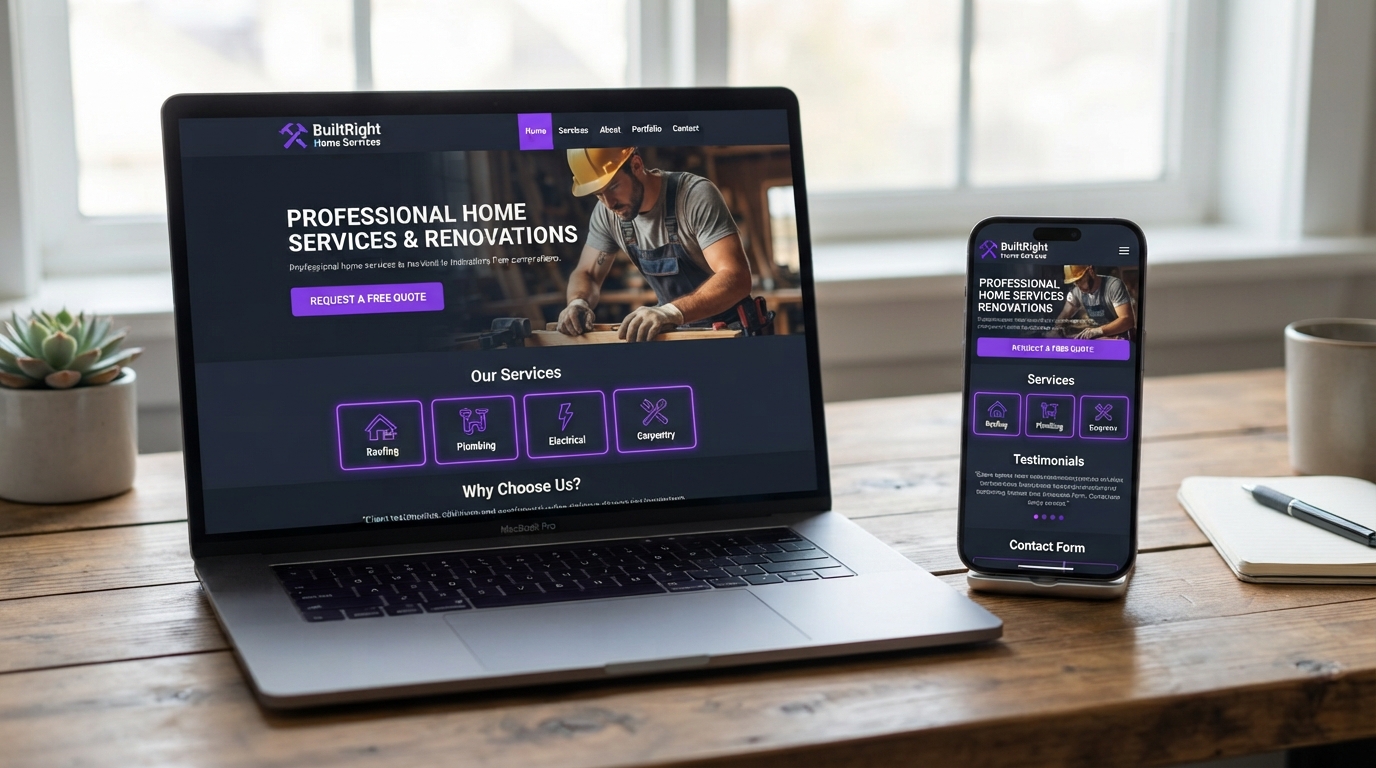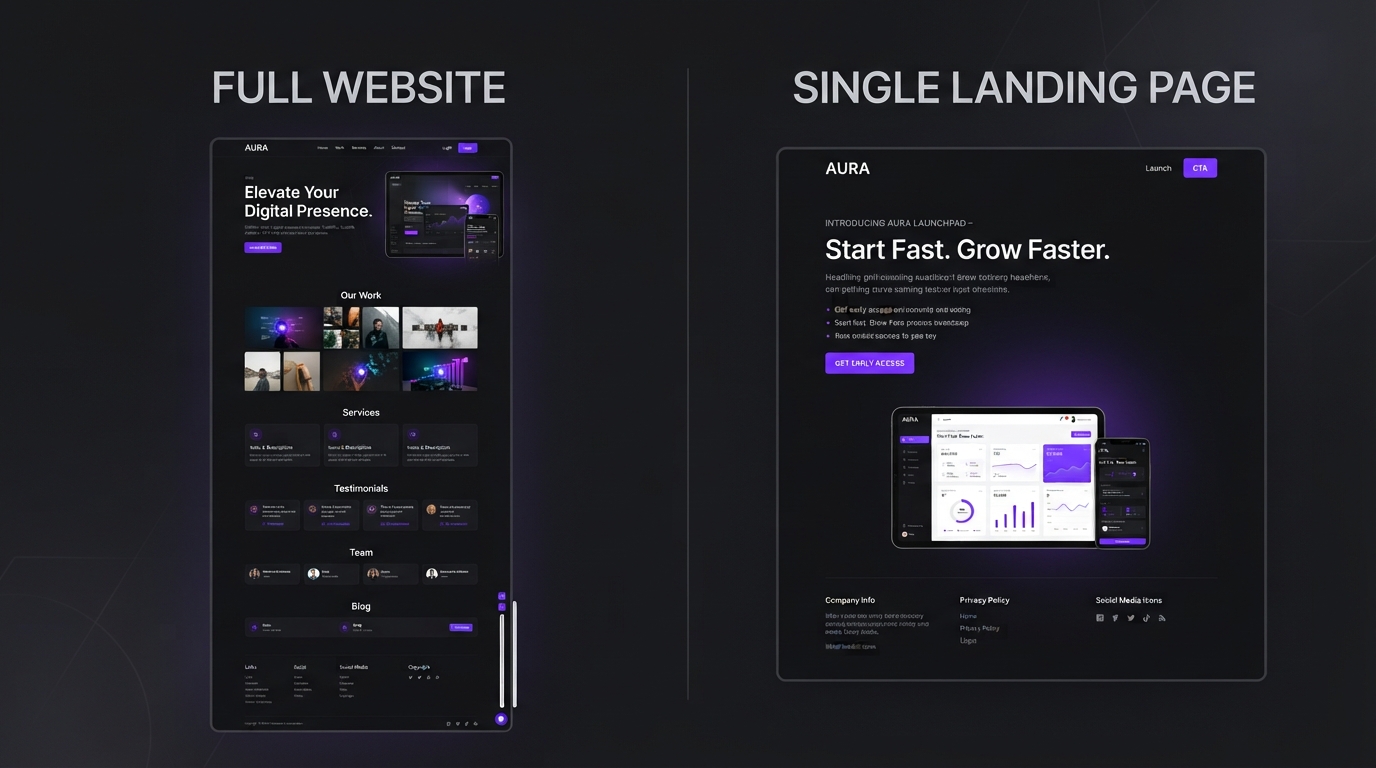
Most contractor websites are designed by web designers who care about aesthetics, not conversions. They create beautiful sites that win design awards but don't book jobs. That's backwards. Your website exists to convert visitors into customers, not to look pretty.
So what actually makes a website convert? It comes down to a few key principles.
Clarity. When someone lands on your site, they should know within 3 seconds what you do, where you do it, and how to contact you. If they have to think about it, they're leaving. Your headline, your subheadline, and your call-to-action should all be immediately clear.
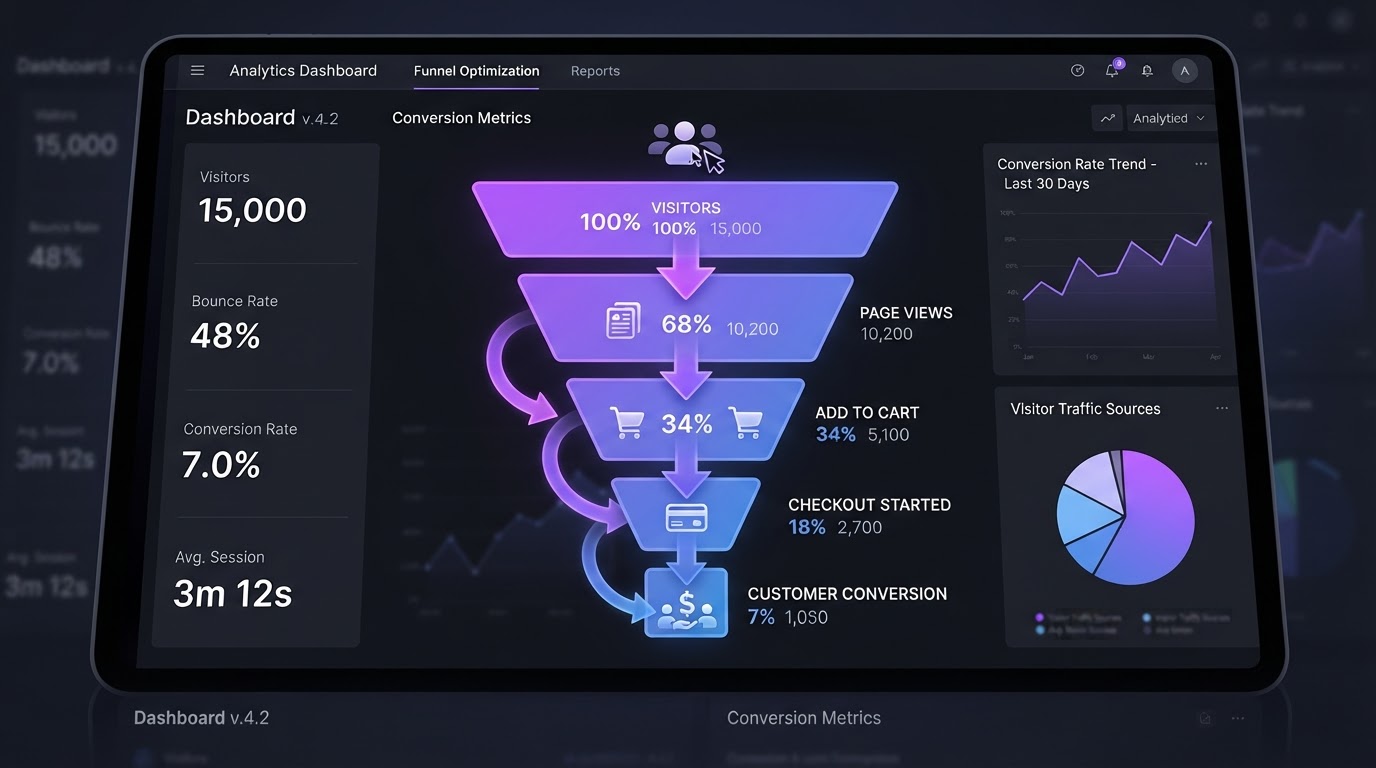
Speed. A 1-second delay in page load time can reduce conversions by 7%. Your site needs to load fast, especially on mobile. Every second counts.
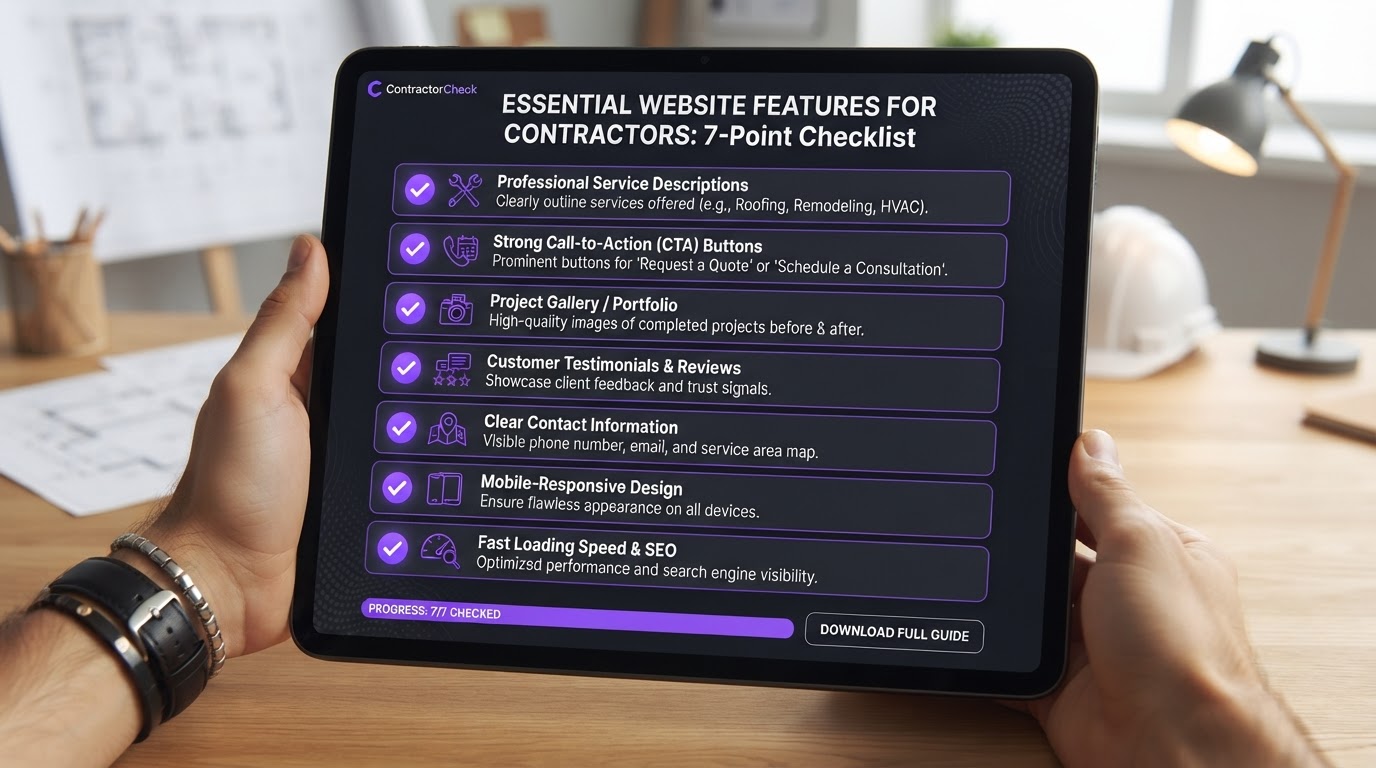
Trust signals. Reviews, certifications, photos of your work, years in business, guarantees — these all build trust. The more trust signals you have, the more confident a visitor feels about contacting you.
Friction reduction. Every step between a visitor landing on your site and contacting you is friction. Long forms, multiple clicks, confusing navigation — all of these reduce conversions. Make it as easy as possible to contact you. Short forms, click-to-call buttons, and obvious CTAs.
AI engagement. The moment someone lands on your site, an AI chatbot can engage them, answer their questions, and capture their info. This turns passive browsing into active conversation and dramatically increases conversion rates.
A converting website isn't about fancy animations or beautiful imagery. It's about making it stupidly easy for a visitor to go from 'I found this website' to 'I just booked a job.' Every element on the page should serve that goal.